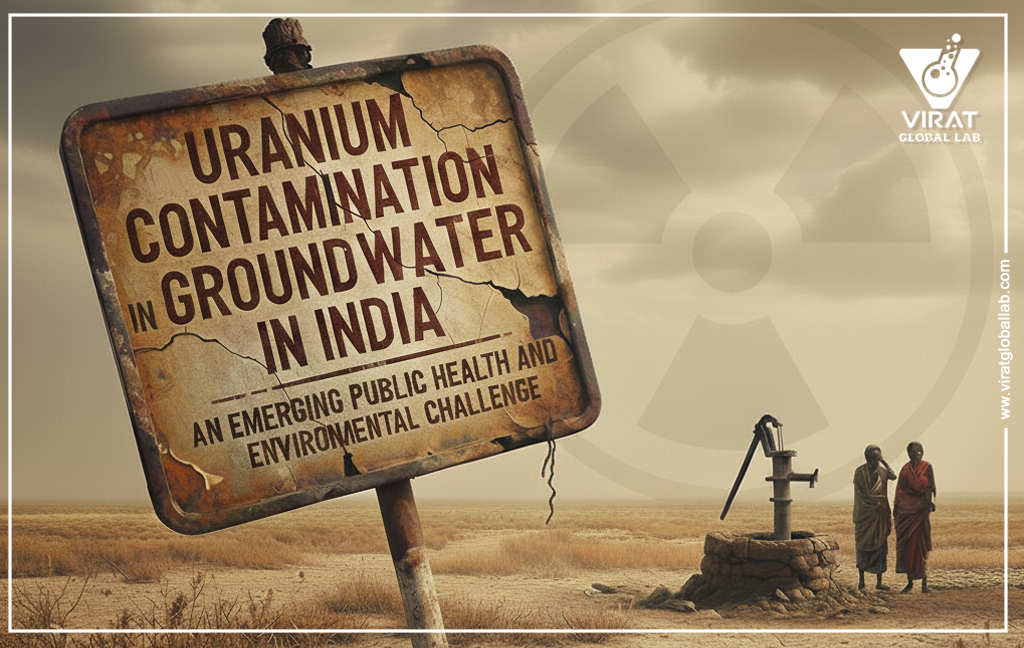
Groundwater remains the primary source of drinking water for a significant portion of India’s population, especially in rural and semi-urban regions. While issues such as fluoride, arsenic, nitrate, and salinity have historically dominated the national discourse on water quality, recent scientific assessments have revealed another critical concern: uranium contamination in groundwater. This issue, once considered isolated, is now recognized as a widespread and growing threat, with implications for public health, agriculture, and environmental sustainability.
Uranium is a naturally occurring radioactive heavy metal found in varying concentrations in rocks and soils. In groundwater systems, its presence is influenced by geochemical conditions, such as:
Human activities, including over-extraction of groundwater, use of phosphate fertilizers, and poorly managed mining operations, can further mobilize uranium into aquifers.
Uranium in drinking water poses two risks:
Multiple studies by the Atomic Energy Regulatory Board (AERB), Central Ground Water Board (CGWB), and academic institutions have documented elevated uranium concentrations across various states.
Key affected regions include:
The concentrations in several areas have exceeded the WHO guideline value of 30 µg/L and, in some cases, even surpassed 100 µg/L, raising severe health concerns.
3.1 Natural Causes
3.2 Anthropogenic Factors
Long-term uranium exposure through drinking water can lead to:
Communities in the Malwa belt of Punjab have already reported increased incidents of health disorders, prompting scientific scrutiny.
Despite established limits, enforcement and routine monitoring remain inconsistent in many states.
Multiple short-term and long-term interventions are available:
6.1 Household-Level Solutions
6.2 Community-Level Solutions
6.3 Long-Term Strategies
The Government of India, through ministries and agencies such as MoJS (Ministry of Jal Shakti), AERB, and CGWB, has initiated:
However, robust implementation and coordinated state-level efforts remain critical.
Addressing uranium contamination demands a multi-tiered approach integrating hydrogeology, public health, water resource engineering, and policy reforms.
Priority actions include:
CONCLUSION
Uranium contamination in groundwater poses serious long-term risks to public health and environmental safety. In regions dependent on borewells and aquifers, routine water quality testing is essential.Renowned Virat Global Lab ( a division of Aseries Envirotek India Private Limited) provides comprehensive groundwater testing services across India , including precise uranium analysis using advanced analytical techniques in compliance with NABL and national drinking water standards. Our scientifically validated reports help individuals, industries, institutions, and local bodies identify contamination levels, evaluate health risks, and implement appropriate treatment and mitigation measures. Take proactive action today & test your groundwater with Virat Global Lab and ensure safe, compliant, and reliable water for present and future generations.
At Virat Global Lab (A Division of Aseries Envirotek India Pvt. Ltd.), we invite businesses, Industries and institutions across various sectors to explore the benefits of partnering with us for their environmental testing and analytical needs.